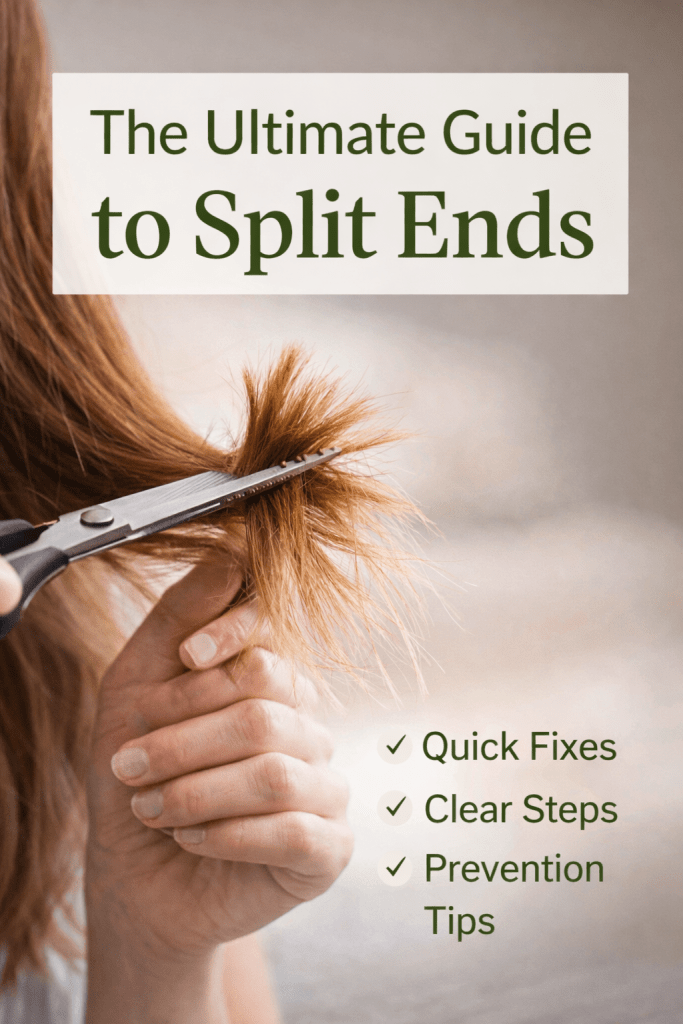
Split ends are one of the biggest reasons hair stops looking healthy — even if it’s long.
If your hair feels rough at the ends, looks thin, or keeps breaking, split ends are likely the cause.
In this guide, you’ll learn:
- How to identify serious split ends
- Quick shortcuts to reduce damage
- When trimming is necessary
- A simple weekly routine to prevent them
Let’s make this easy and practical.
Step 1: Identify Your Split Ends Type
Not all split ends need the same solution.
Here’s a simple rule:
• Small split at the tip → Mild
• Multiple branches → Serious
• Split traveling upward → Severe
If your split looks like branches of a tree, trimming is required.
If it’s just one small split, conditioning may help temporarily.
Step 2: The 3 Quick Shortcuts to Control Split Ends
These are not magic fixes — but they reduce damage fast.
Shortcut 1: Seal the Ends Daily
Apply:
- 2–3 drops of lightweight hair oil
OR - A small amount of leave-in conditioner
Focus only on the ends.
This prevents further splitting.
Shortcut 2: Stop Rough Drying Immediately
Do NOT:
- Rub hair with towel
- Twist tightly
- Brush wet hair aggressively
Instead:
- Gently squeeze water
- Use microfiber towel or soft cotton T-shirt
Friction causes splitting.
Shortcut 3: Heat Protection Is Non-Negotiable
If you use:
- Straightener
- Curling iron
- Blow dryer
Always apply heat protectant first.
Heat is one of the fastest ways to turn mild split ends into severe ones.
Step 3: When You MUST Trim
Trim immediately if:
✔ Splits are visible without close inspection
✔ Hair feels extremely dry at ends
✔ You see fork or tree splits
✔ Breakage is increasing
Important truth:
No oil, serum, or mask can permanently repair a split end.
Only trimming removes it.
Step 4: Weekly Anti-Split Routine (Simple Plan)
Here’s an easy routine anyone can follow:
Once a Week:
- Oil massage (focus on ends)
- Gentle shampoo
- Deep conditioning mask
After Every Wash:
- Leave-in conditioner
- Light oil on ends
Every 8–10 Weeks:
- Trim 1–2 cm
Consistency prevents severe damage.
Step 5: Long-Term Prevention Plan
If you constantly get split ends, check these habits:
• Are you trimming regularly?
• Are you using too much heat?
• Is your shampoo too harsh?
• Are you skipping conditioner?
• Are you tying hair too tightly?
Healthy ends require low friction, moisture, and regular trims.
Quick Summary (If You Want It Simple)
Mild split → Condition + oil
Moderate split → Reduce heat + trim soon
Severe split → Trim immediately
Prevention = Moisture + Protection + Regular trims
Final Thoughts
Split ends are not just cosmetic — they are a sign your hair needs attention.
You don’t need expensive products.
You need:
- Gentle handling
- Consistent moisture
- Regular trimming
Healthy ends make your entire hair look thicker and smoother.
 🌿 GLOW CARE HUB
Leave a comment